LibraOS Build vs Buy: What It Takes to Build Memory, Approvals and Audit Logs Yourself Calling a model is the easy part of an AI product. A few lines of code and you have answers. The hard part is everything around the call that a real product needs: memory so users don't repeat themselves, approvals so the AI can't act alone
LibraOS How to Evaluate AI Agents Before Launch with LibraOS A demo proves an agent can do the task once, with a friendly question, on a good day. Launch means it will meet questions nobody planned for, tools that time out, documents that don't cover the case, and users who push it to act. The gap between the
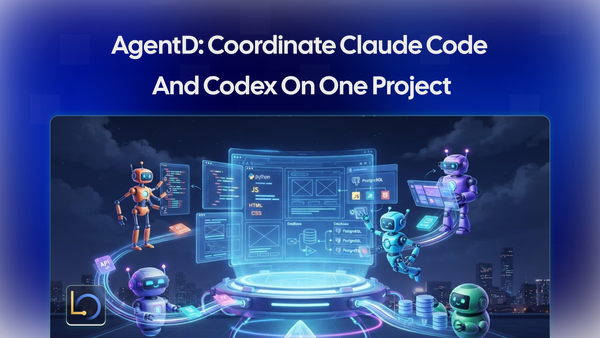
AgentD AgentD: Coordinate Claude Code and Codex on One Project with LibraOS Coding agents like Claude Code and Codex can already handle complex development tasks. But what happens when several agents need to work on the same application? Coordinating tasks, sharing project context, tracking file ownership and verifying completed work can quickly become a challenge of their own. AgentD brings multiple coding
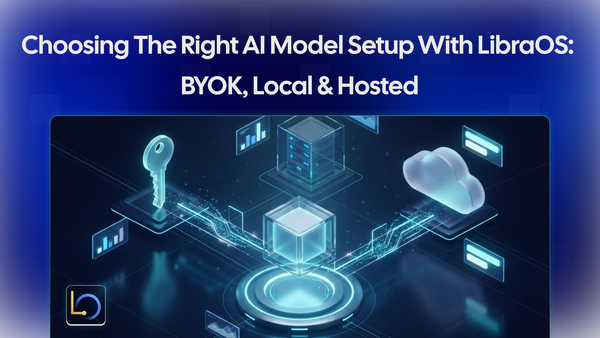
LibraOS Choosing the Right AI Model Setup with LibraOS: BYOK, Local & Hosted Every AI app has to answer one question early: where does the model run, and who provides it? The answer decides where your prompts go, who bills you for inference, and how much infrastructure you operate. With LibraOS, the model is a choice you make separately from the rest of
LibraOS Deploying AI in Customer Environments: A Checklist by LibraOS Sooner or later, a customer you want to sign says: "We like it, but it has to run in our environment." A bank wants model traffic inside its network. A law firm wants client files on its own servers. A public-sector buyer has no internet connection at
LibraOS How to Build Secure Private AI Applications with LibraOS An AI application handles some of the most sensitive data a company has: customer records, contracts, internal documents, and the prompts people type about all of them. "Private" means that data stays where you decide. "Secure" means the AI can only do what you allow, and
AI Chatbot AI Agent vs. AI Chatbot: What’s the Difference and When Should You Use Each? A chatbot answers. An agent gets something done. Both use a language model, and both can look like a chat window. The difference is what happens after the user hits send. A chatbot replies with text and stops. An agent can look things up in your systems, work through several
LibraOS Long-Running AI Agent Tasks: Background Jobs with LibraOS Some agent work fits in a single request: look something up, draft a reply, answer a question. Other work doesn't. Reviewing a month of support tickets, preparing a research summary or working through a long list of records can take minutes or hours, and nobody wants to keep
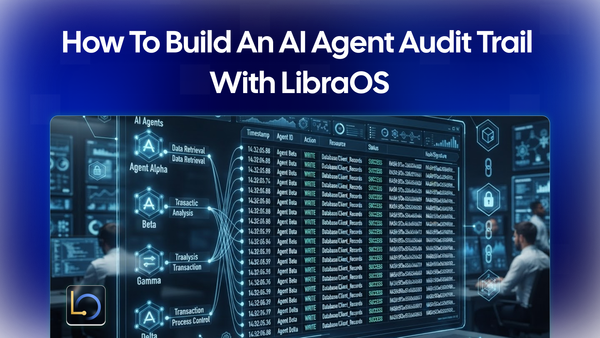
LibraOS How to Build an AI Agent Audit Trail with LibraOS An audit trail is the record that lets you answer one question after the fact: what did the agent do, and why? When an agent reads customer data, drafts a reply or proposes a refund, someone will eventually ask who approved it, what it was based on and what actually
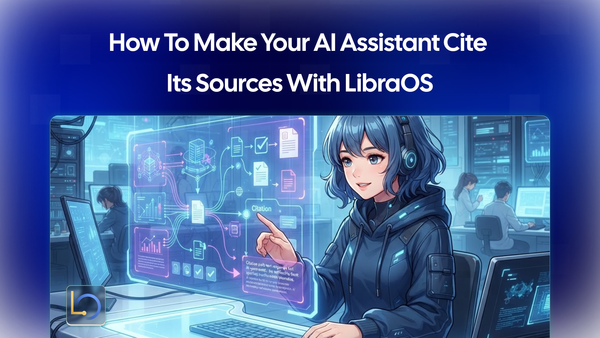
LibraOS How to Make Your AI Assistant Cite Its Sources with LibraOS An assistant that answers from your documents is only useful if people can trust the answer. Citations are how they check. When a reply points to the policy, the ticket or the contract it came from, a person can open the source and confirm in seconds. When it doesn'
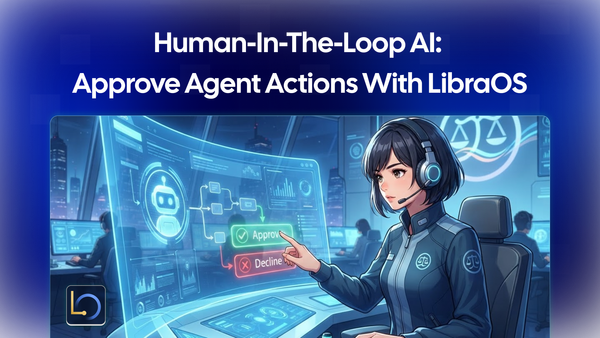
LibraOS Human-in-the-Loop AI: Approve Agent Actions with LibraOS Human-in-the-loop AI means the agent drafts, and a person decides. The agent can read, search and suggest on its own, but actions that change data or reach the outside world wait for a human to approve them. LibraOS lets you choose where actions need approval. For the