Digital Employees: How AI Agents Are Changing the Modern Workforce
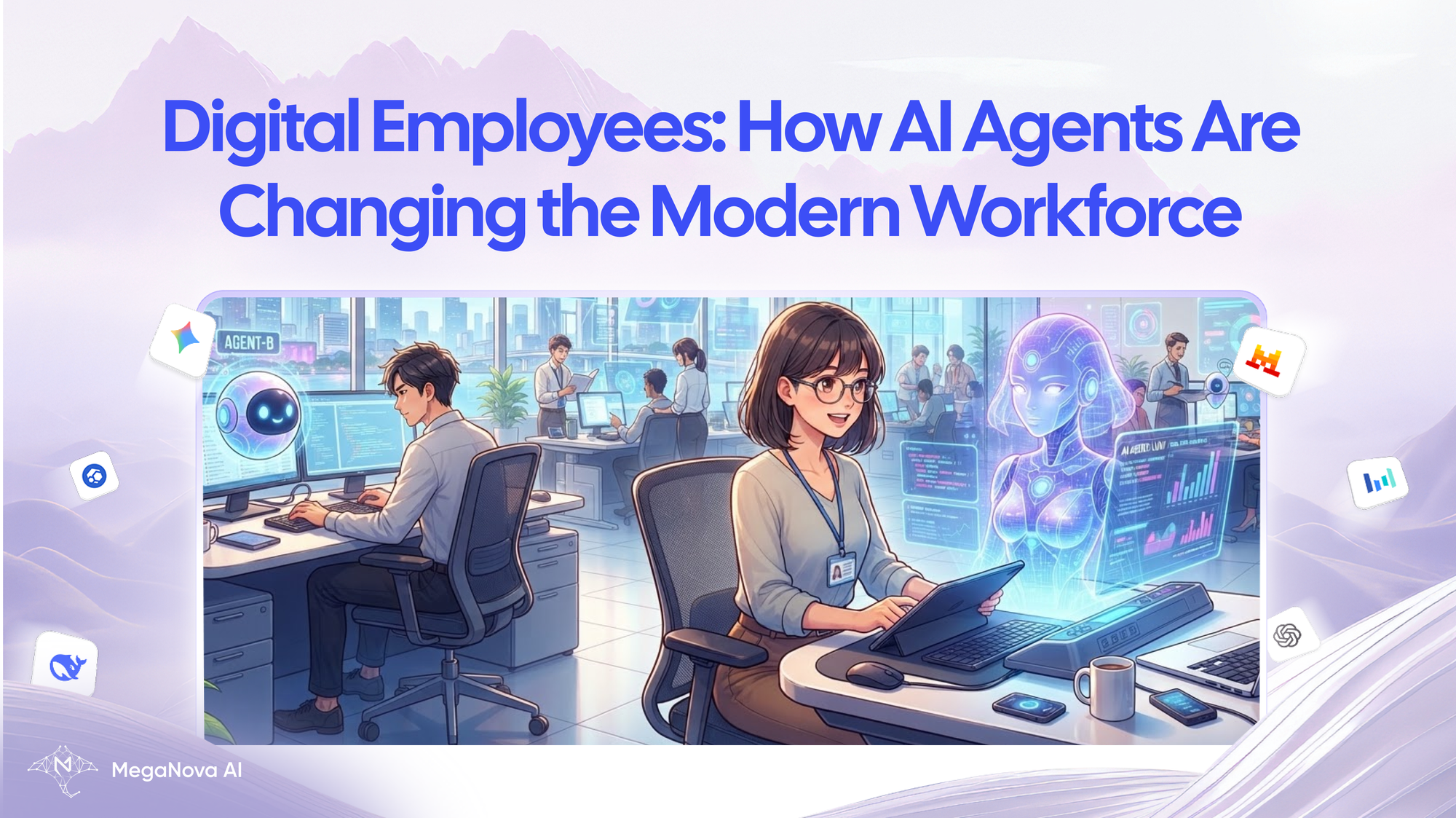
Quick answer: Digital employees are changing the workforce by taking over repetitive, rules-based work so people focus on judgment, relationships and exceptions. Teams are shifting to a hybrid model in which humans set goals, supervise AI agents and handle edge cases, while agents run high-volume processes around the clock.
How are AI agents changing the modern workforce?
The change is happening at the level of tasks, not whole jobs. Most roles are a bundle of tasks; agents absorb the repetitive ones first, such as data entry, triage, first drafts and status updates.
Gartner predicts that at least 15% of day-to-day work decisions will be made autonomously through agentic AI by 2028, up from 0% in 2024. It also expects 33% of enterprise software applications to include agentic AI by 2028, up from less than 1% in 2024 (Gartner).
Which jobs are most affected by digital employees?
Roles with high volumes of structured, repeatable work feel the change first:
- Customer support: agents resolve routine tickets; humans own escalations and VIP accounts.
- Finance operations: agents match invoices and reconcile accounts; analysts review exceptions.
- Sales development: agents research and qualify leads; reps spend more time in conversations.
- HR and recruiting: agents screen and schedule; recruiters focus on candidate experience.
- IT operations: agents handle access requests and runbook tasks; engineers handle incidents.
In each case, the human role moves up the value chain rather than disappearing.
What does a hybrid human–AI team look like?
A hybrid team has three layers:
- Humans set direction: goals, policies, priorities and quality standards.
- Digital employees execute: high-volume, repeatable workflows, 24/7.
- Humans handle exceptions: low-confidence cases, sensitive decisions and customer relationships.
One person can supervise several digital employees, much like a team lead manages a queue. New roles appear around this: agent operations managers, AI workflow designers and AI quality reviewers.
What skills do employees need to work with AI agents?
- Process thinking: describing work as clear steps, rules and outcomes.
- Supervision and review: spotting when an agent is wrong and correcting the rule, not just the case.
- Data literacy: reading dashboards on success rate, cost and turnaround.
- Judgment and communication: the human strengths agents do not replace.
What are the risks of adding digital employees to a team?
The main risks are unclear ownership, weak oversight and over-promising. Gartner warns that many vendors engage in "agent washing", rebranding chatbots and RPA as agents, and estimates only about 130 of thousands of agentic AI vendors are genuine (Gartner).
Reduce risk by giving every digital employee a named human owner, approval gates for high-impact actions, and audit logs. Communicate openly with staff about which tasks are moving to agents and how their roles will grow.
How should leaders prepare their workforce?
- Map tasks, not jobs, and mark which are repetitive and rule-based.
- Pilot one digital employee with a team that volunteers.
- Redesign the human role around the time freed up.
- Train people to supervise and improve agents.
- Measure output, quality and employee experience, not only headcount.
New to the concept? Start with What Is a Digital Employee?. For the financial case, see How to reduce AI cost strategy for 2026 .
FAQ
- Will AI agents take my job? AI agents mostly take over tasks, not entire jobs. Roles built on repetitive work change the most, and people who learn to direct and review agents become more valuable.
- What is a hybrid workforce? A hybrid workforce combines human employees and AI digital employees, with humans setting goals and handling exceptions while agents run repeatable workflows.
- Who manages a digital employee? Each digital employee should have a named human owner responsible for its performance, permissions and escalations.
- What new jobs are created by AI agents? Common new roles include agent operations manager, AI workflow designer, prompt and evaluation specialist, and AI quality reviewer.
- How do I introduce AI agents to my team? Start with a voluntary pilot on one painful, repetitive workflow, share results openly, and redesign roles around the time saved.
What’s Next?
Sign up and explore now.
🔍 Learn more: Visit our blog and documents for more insights or schedule a demo to optimize your enterprise AI context management.
📬 Get in touch: Join our Discord community for help or Contact Us.
Stay Connected
💻 Website: meganova.ai
🎮 Discord: Join our Discord
👽 Reddit: r/MegaNovaAI
🐦 Twitter: @meganovaai