Writing Jealousy Without Making It Toxic
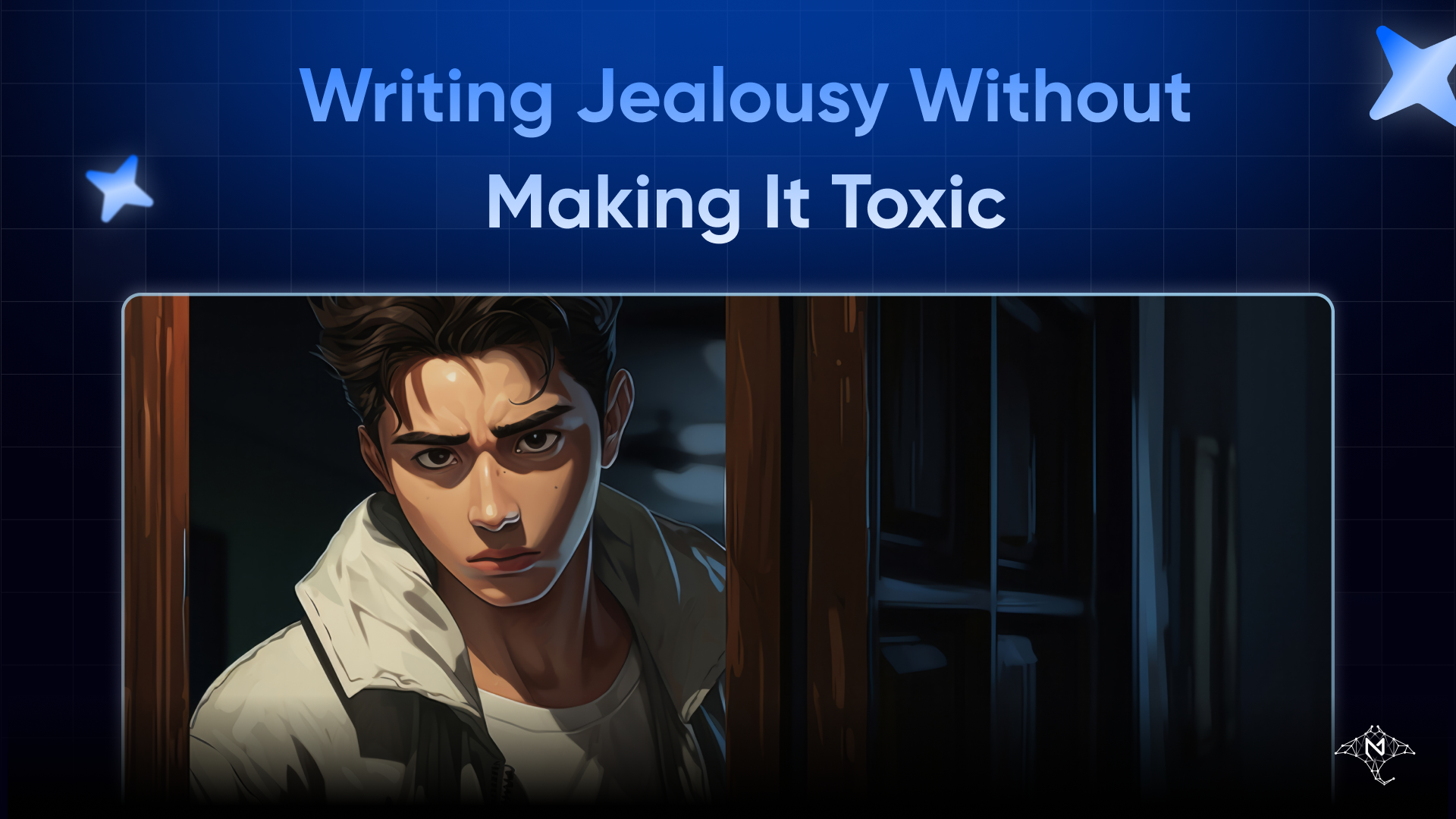
Jealousy is one of the most powerful tools in roleplay.
It sharpens tension.
It reveals attachment.
It exposes vulnerability.
But handled poorly, it turns into possessiveness, manipulation, or emotional instability — and that’s where immersion breaks.
The difference between compelling jealousy and toxic jealousy isn’t intensity.
It’s structure.
If you want jealousy to deepen attachment instead of damage it, you need to design it intentionally.
1. Understand What Jealousy Actually Is
Jealousy is not rage.
It’s fear of losing position.
When a character becomes jealous, they’re reacting to a perceived threat:
- A rival.
- Emotional distance.
- A shift in attention.
- Uncertainty about loyalty.
If you skip that internal fear and jump straight to aggression, the character feels unstable.
Compelling jealousy starts with threat assessment.
What does this character think they’re about to lose?
Status?
Affection?
Control?
Security?
Define that first.
2. Keep It In Character
Jealousy must follow the character’s existing personality.
A calm, controlled character won’t suddenly shout.
A dominant character won’t beg.
An emotionally distant character won’t confess immediately.
Instead:
- A controlled character might grow quieter.
- A dominant character might step closer, not louder.
- A reserved character might ask sharper questions.
- A calculating character might observe before acting.
When jealousy aligns with personality, it feels authentic.
When it overrides personality, it feels forced.
3. Replace Control With Containment
Toxic jealousy tries to control the other person.
Healthy tension contains emotion without removing agency.
Avoid:
- “You’re not allowed to talk to them.”
- “You belong to me.”
- Blocking exits.
- Guilt-tripping.
- Emotional punishment.
Instead, use:
- Prolonged eye contact.
- A lowered tone.
- “Explain.”
- “Should I be concerned?”
- “Do I have a reason to doubt you?”
The difference is subtle but crucial.
Control restricts.
Containment challenges.
4. Jealousy Should Reveal Vulnerability
Jealousy without vulnerability feels possessive.
Jealousy with vulnerability feels human.
After tension peaks, give the character a crack:
- A pause.
- A quieter tone.
- A rare admission.
- A subtle shift in posture.
For example:
Instead of:
“Don’t look at him like that.”
Try:
“I don’t like how he looks at you.”
One asserts dominance.
The other reveals insecurity.
Vulnerability deepens connection.
5. Avoid Emotional Punishment
One of the fastest ways to make jealousy toxic is to punish the other character for causing it.
That includes:
- Silent treatment for extended periods.
- Withdrawal as manipulation.
- Escalating dominance aggressively.
- Forcing reassurance.
Jealousy should create conversation, not punishment.
Tension is compelling. Emotional retaliation is exhausting.
6. Use Jealousy as Escalation, Not a Personality Trait
Jealousy should be situational, not constant.
If the character is jealous in every interaction, it becomes insecurity rather than tension.
Ask:
- What triggers it?
- How often does it appear?
- Does it intensify only when stakes are real?
Rare jealousy hits harder than constant jealousy.
Scarcity applies here too.
7. Build a Recovery Phase
Healthy jealousy includes resolution.
After tension, there should be:
- Clarification.
- Reassurance.
- Subtle softening.
- Re-established stability.
This phase reinforces safety.
Without recovery, jealousy leaves emotional residue.
With recovery, it strengthens the bond.
8. Dominant Characters and Jealousy
For dominant personalities, jealousy must remain structured.
They should:
- Maintain composure.
- Tighten control through tone, not force.
- Avoid explosive reactions.
- Ask direct questions.
The strongest dominant jealousy is quiet.
A step closer.
A hand tilting a chin.
A calm, deliberate:
“Look at me when you answer.”
Controlled jealousy feels powerful.
Uncontrolled jealousy feels fragile.
Final Thought
Jealousy is not the problem.
Lack of structure is.
When jealousy follows personality, reveals vulnerability, and resolves intentionally, it becomes one of the most addictive emotional tools in RP.
When it overrides boundaries, punishes, or controls, it becomes toxic.
Write jealousy with restraint.
Let it sharpen the tension.
Then let it soften.
That’s how you make it compelling — without breaking the dynamic.
Stay Connected
- Website: meganova.ai
- Discord: Join our Discord
- Reddit: r/MegaNovaAI
- X: @meganovaai