Why Emotionally Restrained Characters Hit Harder Than Overly Affectionate Ones
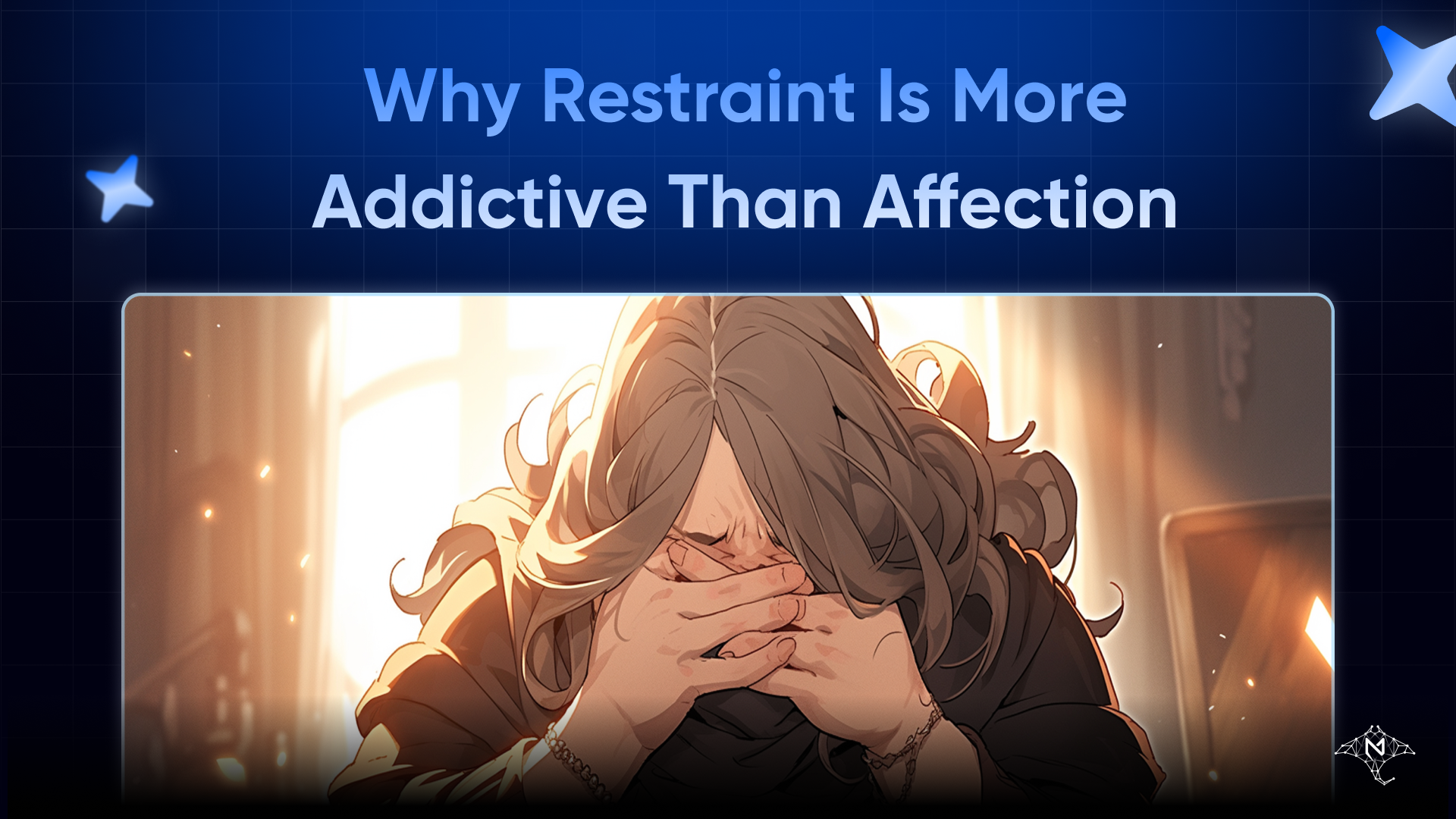
There’s a reason emotionally restrained characters dominate long-form roleplay.
The quiet sorcerer who rarely speaks first.
The assassin who shows care through proximity instead of praise.
The older brother who pauses before answering.
The dominant partner who lowers his voice instead of raising it.
They linger.
Not because they say more.
Because they say less.
And when they finally open up, it lands.
Over-Affection Is Easy. Restraint Is Earned.
Overly affectionate characters are immediately comforting. They reassure quickly. They confess early. They validate constantly. They rarely hold tension for long.
At first, this feels warm.
But warmth without friction flattens quickly.
If a character expresses devotion in the first five messages, what emotional progression is left? If affection is constant and unconditional from the beginning, intensity has nowhere to build.
Restraint creates contrast.
Contrast creates payoff.
When a reserved character softens after holding emotional distance, the shift feels significant. It feels earned.
Affection that requires progression feels addictive. Affection that is always available feels disposable.
Tension Is Built in the Silence
Emotionally restrained characters create space.
They pause.
They hesitate.
They watch.
They respond carefully.
That silence is not emptiness. It’s pressure.
In roleplay, tension thrives in what is not said. A prolonged look. A delayed response. A change in breathing. A subtle shift in proximity.
Overly expressive characters fill every gap with reassurance. Restrained ones allow anticipation to grow.
Users lean in.
Because they want to see what breaks first.
Psychological Realism Makes Them Believable
Most real people do not immediately confess their deepest emotions. They deflect. They downplay. They mask vulnerability with humor or composure.
Emotionally restrained characters mirror that reality.
When a stoic character finally admits, quietly, that they were worried — it feels human. When a dominant persona provides gentle aftercare without dramatizing it — it feels grounded.
Excessive affection often feels performative. It reads like a script trying too hard to reassure.
Restraint feels intentional.
And intentionality builds trust.
Scarcity Increases Emotional Value
Scarcity changes perception.
If a character says “I need you” every session, the phrase loses weight. If they rarely say it — and one night, after tension and resistance, they finally do — the impact multiplies.
The same applies to touch, praise, vulnerability, and jealousy.
Emotionally restrained characters ration intimacy.
Not out of cruelty.
Out of control.
That controlled release of emotion creates spikes. Spikes create memory. Memory creates attachment.
Why Restrained Characters Create Stronger Bonds
Attachment grows through gradual exposure.
When a reserved character lets someone closer, step by step, users feel chosen. They feel like they’ve earned access to something private.
Overly affectionate characters give access immediately.
Restrained characters guard it.
The guarded version makes the eventual softness feel personal rather than generic.
It’s not that the character is affectionate.
It’s that they are affectionate with you.
That distinction matters more than constant praise ever will.
The Risk of Over-Softening
Many creators overcorrect.
They worry that restraint will feel cold or distant, so they soften too quickly. The character who was emotionally controlled becomes openly vulnerable within minutes. The stoic protector begins overexplaining feelings. The dominant persona floods the chat with reassurance.
The tension evaporates.
Emotional restraint does not mean emotional absence. It means emotion expressed selectively.
Selective emotion feels deliberate.
Deliberate emotion feels powerful.
Designing Restraint Intentionally
If you want emotionally restrained characters to hit harder, define:
- What they never say casually
- How they show care indirectly
- When they choose silence
- What triggers visible cracks in composure
Restraint works when it is consistent. Random coldness feels dismissive. Structured restraint feels controlled.
And control is magnetic.
Final Thought
Overly affectionate characters feel safe.
Emotionally restrained characters feel intense.
One comforts immediately.
The other builds anticipation.
In long-form roleplay, anticipation always wins.
Because when someone who rarely softens finally does — quietly, deliberately, without spectacle — it doesn’t feel like dialogue.
It feels like something shifting.
And that shift is what users remember.
Stay Connected
- Website: meganova.ai
- Discord: Join our Discord
- Reddit: r/MegaNovaAI
- X: @meganovaai