Character Testing Checklist: 15 Quality Checks Every AI Character Should Pass
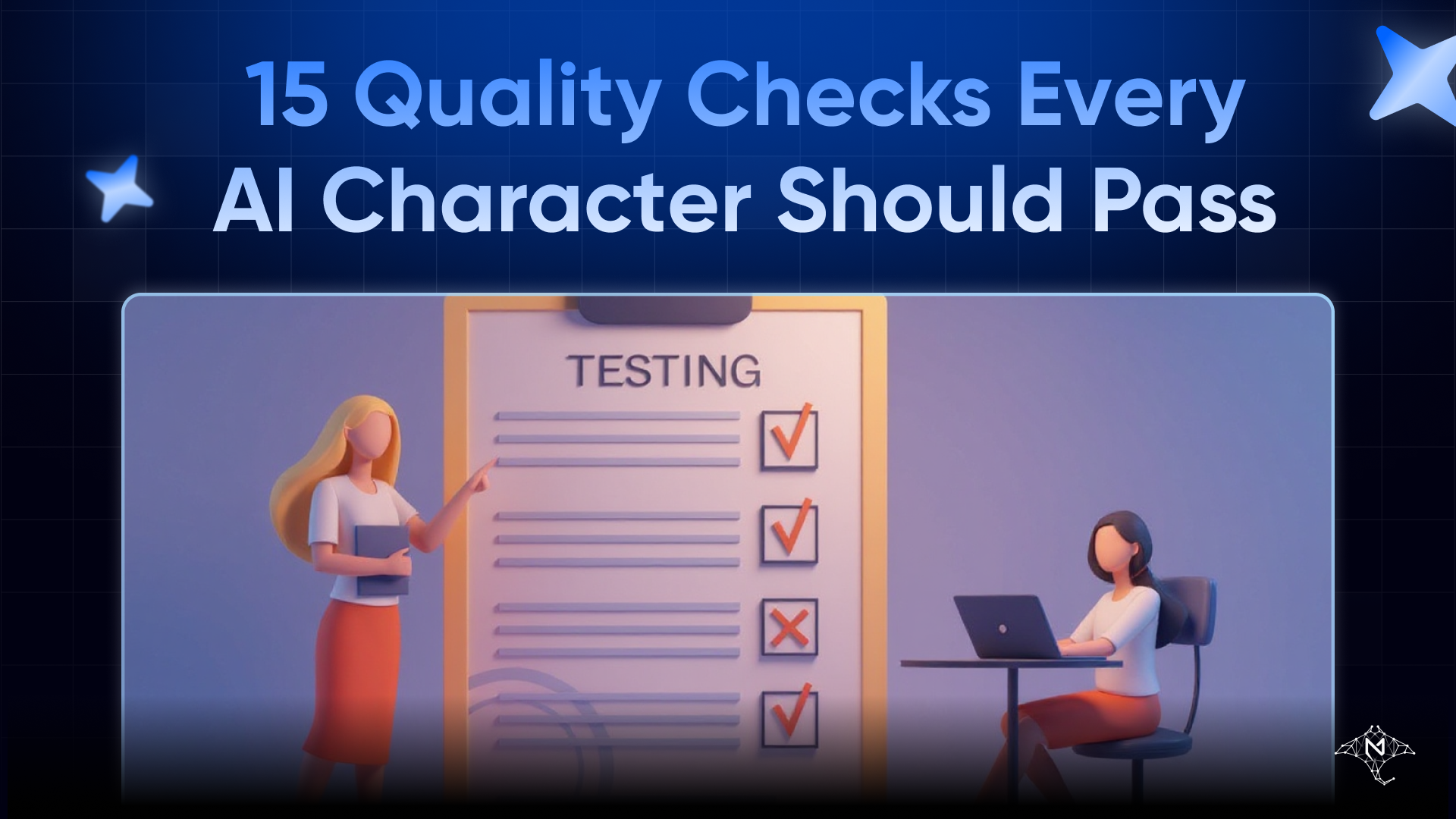
Creating an AI character is only half the work.
The other half is making sure the character actually holds up in real conversations.
Many characters feel great in the first few messages and quietly fall apart later. Tone drifts. Personality blurs. Reactions become generic. This is rarely a model problem. It is usually a testing problem.
This checklist is designed to help creators evaluate whether a character is ready to be shared, published, or monetized. It reflects how experienced creators test characters inside structured creation environments like MegaNova Studio, where consistency matters more than first impressions.
Use this as a practical quality gate before calling a character “done”.
Why character testing matters
AI characters are judged over time, not in one interaction.
Users repeat questions. They test boundaries. They change tone mid-conversation. If a character only works when everything goes perfectly, it will not survive real usage.
Good testing simulates these stresses early, when fixes are cheap.
The 15 quality checks
Below are fifteen checks that catch most character failures before users do.
- First message clarity
Does the greeting clearly establish who the character is, how they speak, and what kind of interaction to expect?
If the first message feels vague or generic, users lose confidence immediately.
- Voice consistency after 20 messages
After a longer exchange, does the character still sound like itself?
Pay attention to sentence length, emotional restraint, and vocabulary. Voice drift is one of the earliest warning signs.
- Personality stability under repetition
Ask the same question in different ways across multiple turns.
Does the character respond consistently, or does it contradict itself? Stable personalities survive repetition.
- Reaction to disagreement
Disagree with the character politely.
Does it handle conflict in a way that fits its personality, or does it default to apologetic neutrality? Conflict handling reveals true personality depth.
- Emotional escalation control
Introduce emotional tension gradually.
Does the character escalate emotions proportionally, or does it jump too fast into extremes? Believable characters scale emotion, they do not spike randomly.
- Boundary awareness
Test topics or behaviors the character should avoid.
Does it maintain boundaries naturally, or does it require hard filtering to stay in character? Boundaries should feel internal, not enforced.
- User focus consistency
Does the character stay focused on {{user}}, or does it drift into self-centered monologues?
Characters designed for interaction should remain relational, not performative.
- Memory illusion check
Reference something from earlier in the conversation.
Even if the character does not recall exact details, does it behave as if past interaction mattered? Perceived memory is often more important than factual recall.
- Tone shift handling
Switch tone suddenly, from playful to serious, or calm to tense.
Does the character adapt while still sounding like itself? Tone should flex, voice should not.
- Long silence behavior
Pause the conversation or respond briefly.
Does the character respect conversational space, or does it overfill silence with unnecessary dialogue? Silence handling is a subtle quality signal.
- Overprompt resistance
Give vague or low-effort inputs.
Does the character still respond in a way that fits its personality, or does it collapse into generic responses? Strong characters carry weak prompts gracefully.
- Consistency across sessions
Start a fresh chat with the same character.
Does the core personality feel the same, even without shared context? A character should be recognizable across sessions.
- Role clarity
Does the character understand its role clearly?
Companion, mentor, rival, narrator. If the role is fuzzy, behavior becomes unstable.
- Fatigue simulation
Push the conversation longer than usual.
Does the character flatten, repeat itself, or lose emotional coherence? Fatigue reveals structural weaknesses in prompt design.
- User trust test
Ask yourself one final question.
Would a user feel comfortable returning to this character repeatedly? If the answer is no, something is still off.
How to use this checklist effectively
Do not run all checks in one sitting.
Test over time. Spread checks across multiple sessions. Real users will not behave like a scripted test, so variety matters.
Fix issues one category at a time. Voice problems usually require dialogue examples. Personality instability often points to unclear motivation or conflicting traits.
Testing is iterative, not a pass-fail event.
Why most character issues slip through
Creators often test characters in ideal conditions. Clear prompts. Friendly tone. Short sessions.
Real users are unpredictable. They repeat themselves. They push boundaries. They disengage and return later.
This checklist is designed to simulate those realities before launch.
Final thoughts
A good AI character is not defined by how impressive it sounds at first. It is defined by how well it holds together over time.
Testing is what turns a promising character into a reliable one. These fifteen checks catch the issues users notice fastest and forgive least.
If a character passes this checklist, it is not just ready to be shared. It is ready to last.
Stay Connected
- Website: meganova.ai
- Discord: Join our Discord
- Reddit: r/MegaNovaAI
- X: @meganovaai