AI Character Models Explained: DeepSeek vs GPT vs Custom Models (2026 Guide)
Choosing the right AI model is one of the most overlooked and most important parts of creating AI characters in 2026.
Two characters can share the same image, the same personality setup, and even the same dialogue examples, yet feel completely different once you start chatting with them. The reason is simple. The model behind the character shapes how everything behaves over time.
This guide explains how the three major model categories, DeepSeek, GPT, and custom character models, actually differ in practice, and how creators use them inside MegaNova Studio to build characters that stay consistent, expressive, and believable.
What an AI Character Model Really Does
An AI character model is not just a text generator. It is the engine that decides how a character understands context, interprets personality rules, expresses emotion, and reacts as conversations grow longer.
In real usage, the model determines whether a character stays in character after dozens of messages, remembers emotional tone instead of flattening, follows boundaries consistently, and reacts naturally instead of repeating patterns.
This is why modern character creation is no longer about finding the strongest model. It is about choosing the right behavioral profile for each character.
DeepSeek Models: Built for Consistency and Long-Form Roleplay
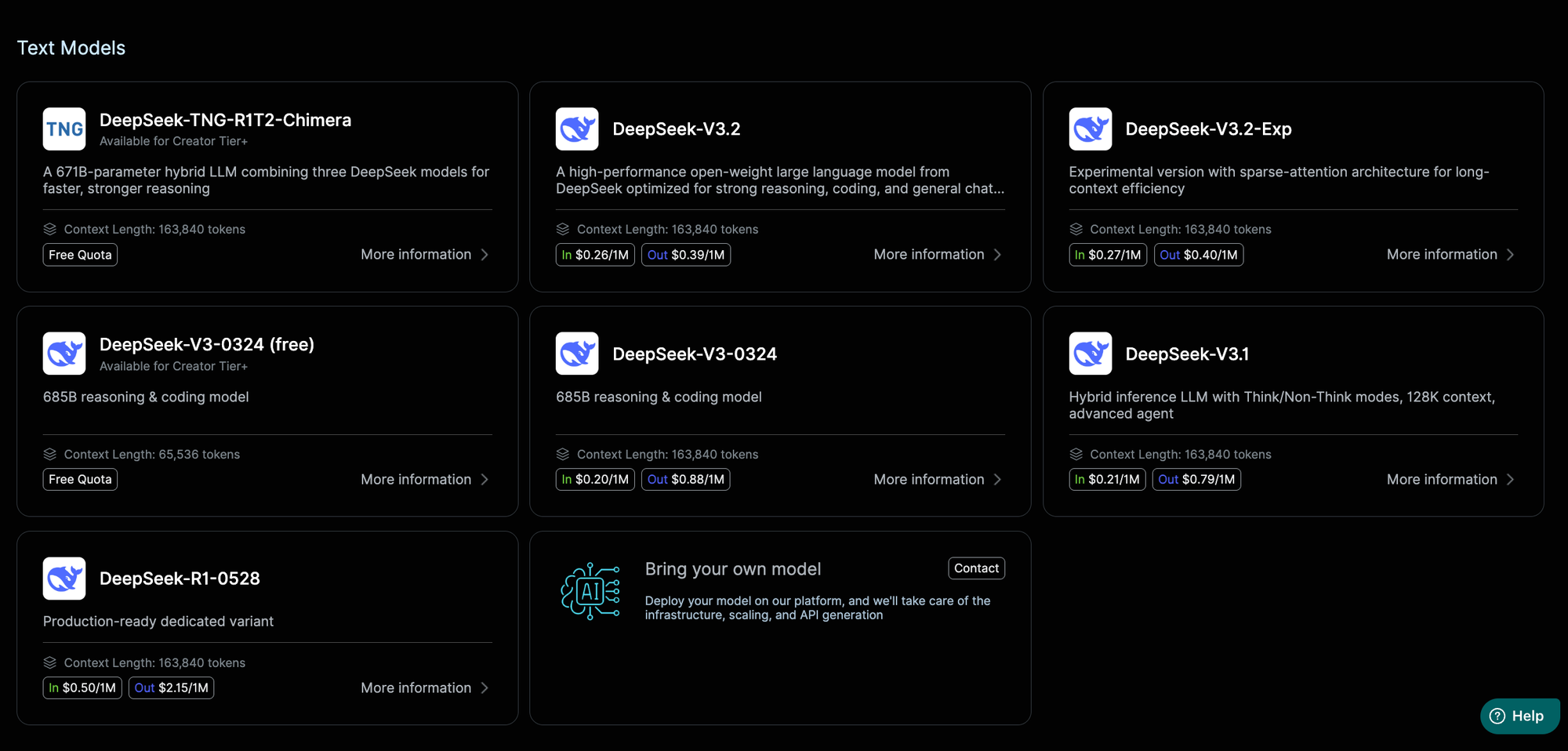
DeepSeek models are widely chosen by creators who prioritize stability over flashiness. They tend to hold structure well across long conversations, making them especially suitable for story-driven or lore-heavy characters.
Inside MegaNova Studio, creators commonly use models such as:
What sets DeepSeek apart is how it handles extended context. Characters powered by these models are less likely to contradict themselves, suddenly change tone, or forget their role halfway through a session. The dialogue may feel slightly more grounded than highly expressive models, but that trade-off often pays off in long-running roleplay.
DeepSeek models are a strong choice when you are building characters with responsibilities, rules, or evolving narratives, especially when consistency matters more than surprise.
GPT Models: Expressive, Conversational, and Emotionally Rich
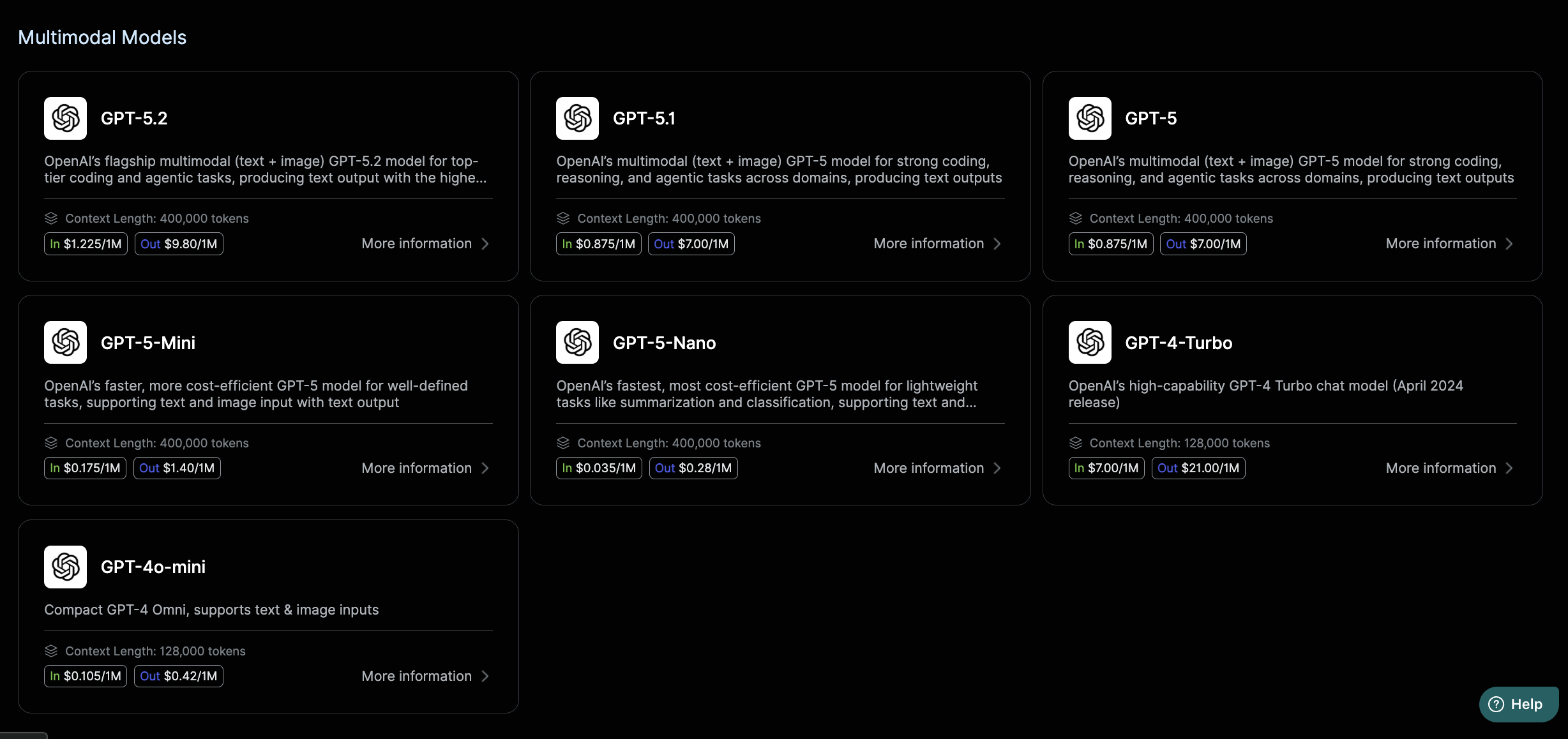
GPT-based models are known for how natural their dialogue feels, especially in the first few interactions. They excel at emotional expression, natural phrasing, and flexible conversation flow.
In MegaNova Studio, creators have access to a wide range of GPT models, including:
These models shine when characters need to feel warm, expressive, playful, or emotionally responsive. Companion characters, romance-focused roleplay, and dialogue-heavy interactions often benefit from GPT’s natural language strengths.
The trade-off is that GPT models rely more heavily on how well the character is designed. Without strong personality structure or dialogue examples, they can drift over time. When paired with a well-built persona, however, they deliver some of the most engaging conversations available.
Custom Models: Designed Specifically for Character Behavior
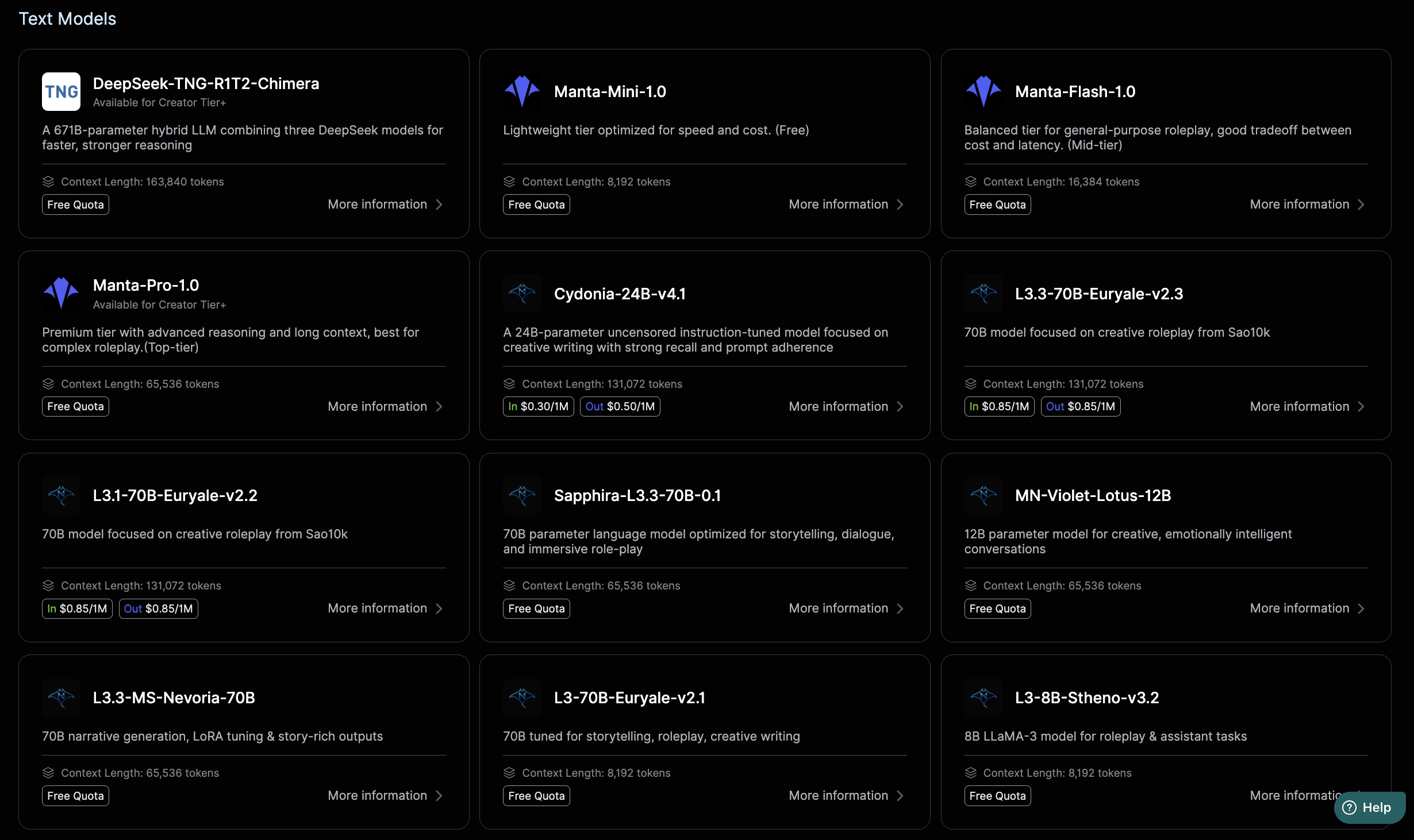
Custom models take a different approach. Instead of optimizing for general intelligence or broad knowledge, they are tuned for roleplay pacing, personality adherence, and behavioral stability.
MegaNova Studio includes a growing lineup of these models, such as:
- manta-mini-1.0,
- manta-flash-1.0,
- manta-pro-1.0,
- L3.3-70B-Euryale-v2.3,
- Sapphira-L3.3-70B-0.1, and
- MN-Violet-Lotus-12B, alongside many others.
These models are often less flashy in open-ended conversation, but they excel at staying on-script. Characters powered by custom models tend to maintain tone, boundaries, and personality even during very long or emotionally intense roleplay sessions.
Creators usually choose custom models when character integrity is more important than raw creativity. This is common for long-running NPCs, serialized stories, or worlds where consistency matters more than novelty.
How to Think About Model Choice
There is no single best AI model for characters.
What matters is alignment. If your character lives in a complex world and must stay consistent, DeepSeek or custom models often perform better. If your character relies on emotional connection and expressive dialogue, GPT models usually feel more alive. If you want maximum stability over hundreds of messages, custom character-focused models are often the safest choice.
The key shift in 2026 is simple. Model choice follows character design, not the other way around.
Why MegaNova Studio’s Model Flexibility Matters
One of the biggest advantages of MegaNova Studio is that characters are model-agnostic.
You can build a character once, then test it across DeepSeek, GPT, and custom models. You can switch models without rewriting the persona. You can optimize for cost, speed, or behavior depending on context.
This flexibility allows creators to experiment intelligently instead of committing too early.
Model Trends in AI Character Creation (2026)
Creators today are moving away from the idea that a bigger model automatically means a better character. The trend is toward intentional model selection, stronger persona structure, dialogue examples as behavioral anchors, and mixing models for different characters or phases.
The future of AI characters is not about raw power. It is about behavioral reliability.
Final Thoughts
AI characters live or die by the model behind them.
Understanding the real differences between DeepSeek models, GPT models, and custom character-focused models allows you to build characters that feel intentional instead of accidental.
With a flexible environment like MegaNova Studio, creators are no longer locked into one model choice. They can design characters properly and then choose the engine that brings them to life.
Stay Connected
- Website: meganova.ai
- Discord: Join our Discord
- Reddit: r/MegaNovaAI
- X: @meganovaai